- Juniorstocks.com
- Posts
- Gold Reclaims $5,000 + The "Freak" Discovery
Gold Reclaims $5,000 + The "Freak" Discovery
You're receiving this newsletter as a subscriber to JuniorStocks.com. Join the conversation on our socials below.

Editorial Team
February 10, 2026
What is the price of 60 days’ worth of mineral security for General Motors and Google?

Is $991 million a cheap price to pay for 60 days of industrial survival?
That’s the projected bill for Project Vault to secure a two-month strategic buffer of key battery minerals, lithium, cobalt, and nickel, in 2026.
With a massive $10 billion EXIM loan and private backing from heavy hitters like General Motors (NYSE: GM), Google (NASDAQ: GOOG), Stellantis (NYSE: STLA), and Boeing (NYSE: BA), the US is finally treating lithium with the same strategic reverence as crude oil.
But while the price tag looks manageable, the strategy raises bigger questions:
Does a "pay-to-play" option model effectively democratize security, or does it only protect the giants?
With trading houses like Traxys and Mercuria procuring the metal, can we ensure the stockpile isn't just filled with material from the very competitors we are trying to hedge against?
Is a 60-day buffer a true "Fort Knox," or just a speed bump in a potential trade war?
We have bought the insurance policy. Now, will it pay out?
Is Snowline Gold the "Freak Discovery" the Mining Industry Has Been Waiting For? Why Carson Block is Going Long on Gold

Carson Block has spent his career finding the cracks in the world’s biggest companies. So why is he suddenly building a massive "long" position in a Yukon junior miner?
In a recent interview, Block broke down his thesis: it’s not just about the gold; it’s about the desperation of the mining majors. With Tier-1 assets depleting globally, majors like B2Gold Corp. (TSX: BTO | NYSE: BTG) are backed into a corner.
Block’s take? "Majors have spent very, very little on greenfield exploration... as they deplete them, it becomes more and more urgent to acquire."
With an absurdly low $569/oz AISC and a "freak" discovery where mineralization hits the surface, Block is betting on a massive takeover premium.
Is the market too distracted by AI to see the value in the ground?
Gold Reclaims $5,000 Level as Dip-Buyers Shake Off Volatility

The gold bull market isn't over, it’s just taking a breather.
Gold has officially reclaimed the $5,000 mark, bouncing back from last week's historic rout. While the volatility has been intense, the drivers remain clear: a softening dollar, relentless buying from the People’s Bank of China (15 months and counting), and renewed retail interest.
Perhaps most interesting is the divergence in the bond market, with reports of Chinese regulators moving away from US Treasuries. With major institutions like Goldman Sachs and Deutsche Bank staying bullish, the "debasement trade" seems very much alive.
Are you buying the dip, or waiting for the dust to settle?
The "Rare" Myth: Why Rare Earths Aren't the Scarcity, But Processing Is.
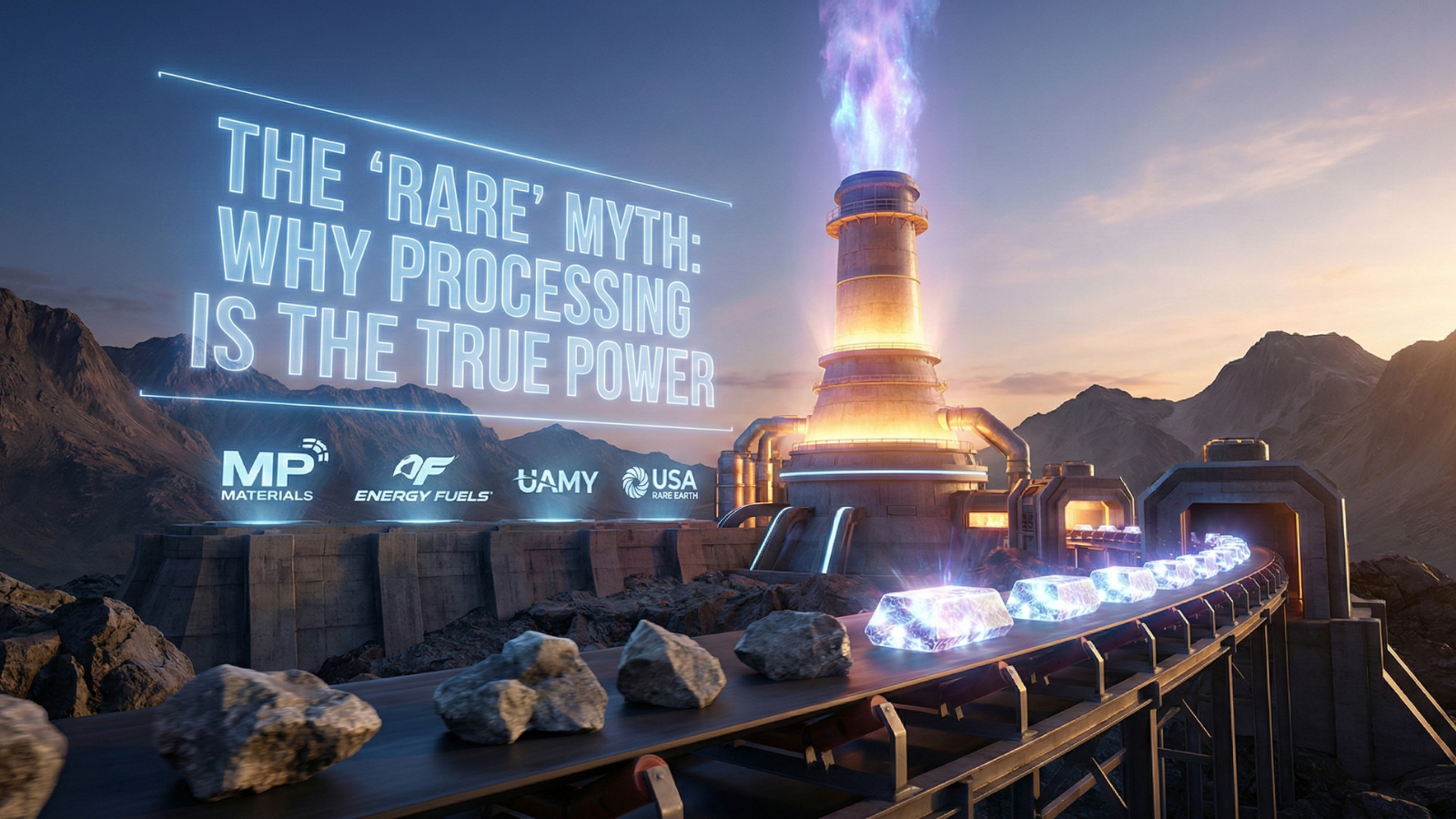
Most people hear “rare earths” and think of an exotic, disappearing resource. The reality? They are as common as copper. The scarcity isn’t in the ground, it’s in our industrial capacity.
As Diego Davila recently highlighted via LinkedIn, the real bottleneck is execution. Owning a deposit is a map; owning a smelter is a strategy.
From MP Materials (NYSE: MP) commissioning heavy rare earth facilities to United States Antimony (NYSE American: UAMY) integrating its Thompson Falls smelter, we are seeing a shift from extraction to "Performance Layer" management. With the launch of Project Vault, the U.S. is finally treating processing capacity as a strategic asset.
The future belongs to those who can refine the rock, not just those who can find it.
We want your feedback on this week’s market insights! How’d we perform? 📈📉Let us know where we stand! 🚀 |