- Juniorstocks.com
- Posts
- Cenovus vs. Carney: The battle for Canada’s oil future
Cenovus vs. Carney: The battle for Canada’s oil future
From the "brutal math" of the energy crisis to a massive new copper target in Chile, catch up on the four critical stories moving the natural resource markets this week.

Editorial Team
May 08, 2026
Cenovus CEO and Prime Minister Mark Carney Face Off Over the Fate of Canadian Oil Investment

The tension between Canada’s climate goals and its economic engine just reached a boiling point.
In a very public clash, Jon McKenzie, CEO of Cenovus Energy (TSX: CVE), warned that Ottawa's environmental policies are driving capital across the border, making new resource development nearly impossible.
Prime Minister Mark Carney quickly fired back, insisting that decarbonization isn't an unfair burden, it's the golden ticket to securing international buyers and ensuring long-term survival.
The market itself is showing complex signals. While McKenzie warns of capital flight, his own company just posted a staggering $15 billion quarter. Meanwhile, global players like Shell (NYSE: SHEL) are still finding massive long-term value in Canadian assets, as evidenced by their recent strategic move on ARC Resources Ltd. (TSX: ARX).
Is the Canadian energy sector heading for a low-carbon renaissance or a massive capital exodus?
How the Global Oil Shock is Forcing Gold Miners to Change Tactics

A geopolitical oil shock is squeezing the entire mining sector, and the margin pressure is incredibly real.
Heavyweights like Gold Fields (NYSE: GFI) are bracing for an estimated forty to fifty dollars per ounce increase in operating costs purely due to surging diesel and freight prices. They are relying on massive output from their Chilean operations and the strategic weight of their recent mega-acquisitions of Osisko Mining (TSX: OSK) and Gold Road Resources (ASX: GOR) to weather the storm and maintain production guidance.
Junior explorers, however, do not have the luxury of absorbing these costs through sheer volume. For them, soaring diesel prices mean an accelerated cash burn and a fatal end to the era of speculative wildcat drilling.
This is exactly why companies like Kalo Gold Corp. (TSXV: KALO | OTCID: KLGDF) are setting the new industry standard. By utilizing advanced airborne geophysics and systematic geochemistry at their Vatu Aurum project, they are pinpointing ultra-high-probability structural traps before the expensive drill rigs ever arrive on site. In a high-cost macroeconomic environment, this precision-first approach is no longer just a smart strategy, it is the only way forward.
As capital markets ruthlessly penalize those who refuse to adapt, which explorers will secure funding, and which will simply run out of gas?
The Brutal Math of the Oil Crisis According to Mike Wirth and Jeff Currie
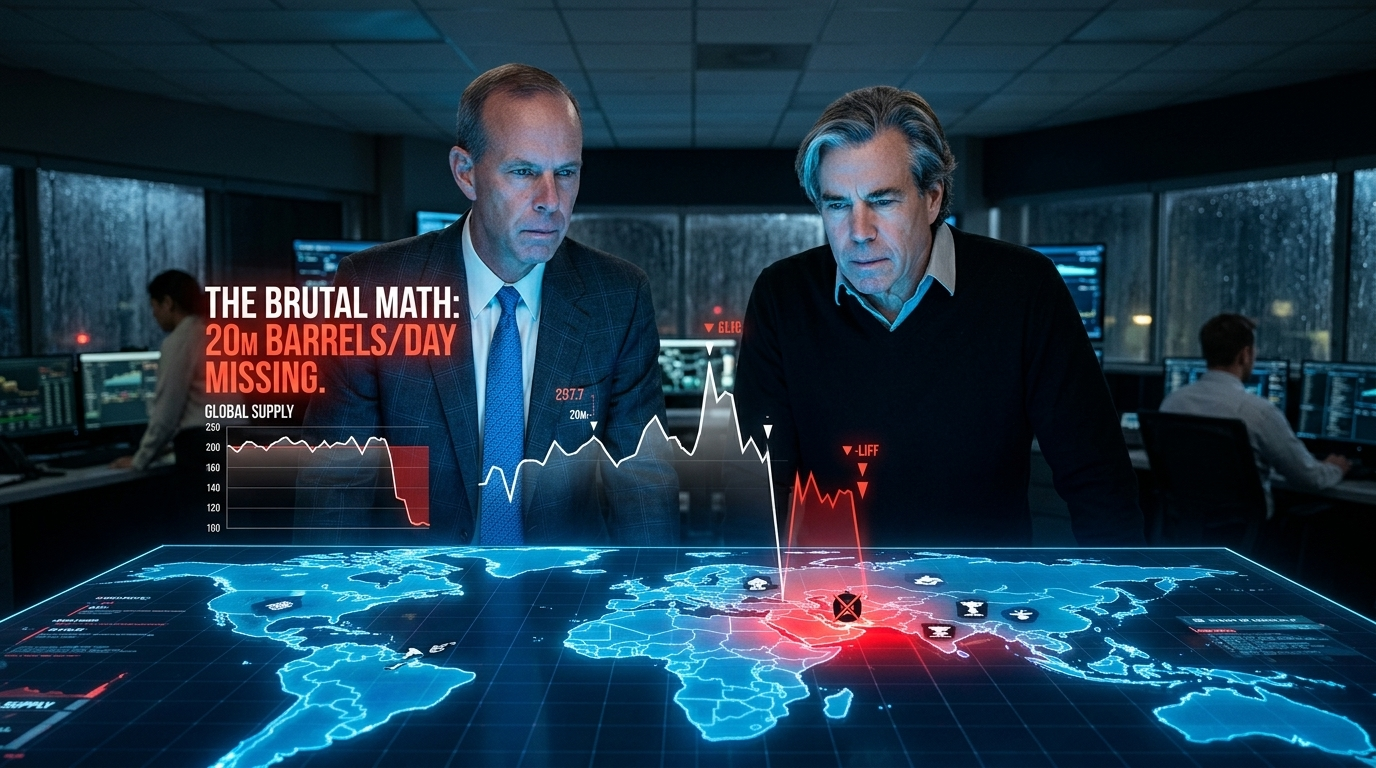
With the Strait of Hormuz paralyzed, 20 million barrels of daily crude have simply vanished.
The leaders of Chevron (NYSE: CVX) and The Carlyle Group (NASDAQ: CG) are dropping the corporate sugarcoating: global storage tanks are rapidly drying up, and $114 Brent crude is already here.
The ripple effects are bankrupting airlines, and as Svein Tore Holsether of Yara International (OTCID: YARIY) warns, the supply shock is now severely threatening global food security due to dropping fertilizer production.
The world's shock absorbers are officially gone, and these executives are making it clear that the era of hoping for a swift diplomatic fix is over.
Are you prepared for the incoming macroeconomic shockwave across the energy and agriculture sectors?
3D Geophysics Unlocks Massive Untested Target at Super Copper's Chilean Asset
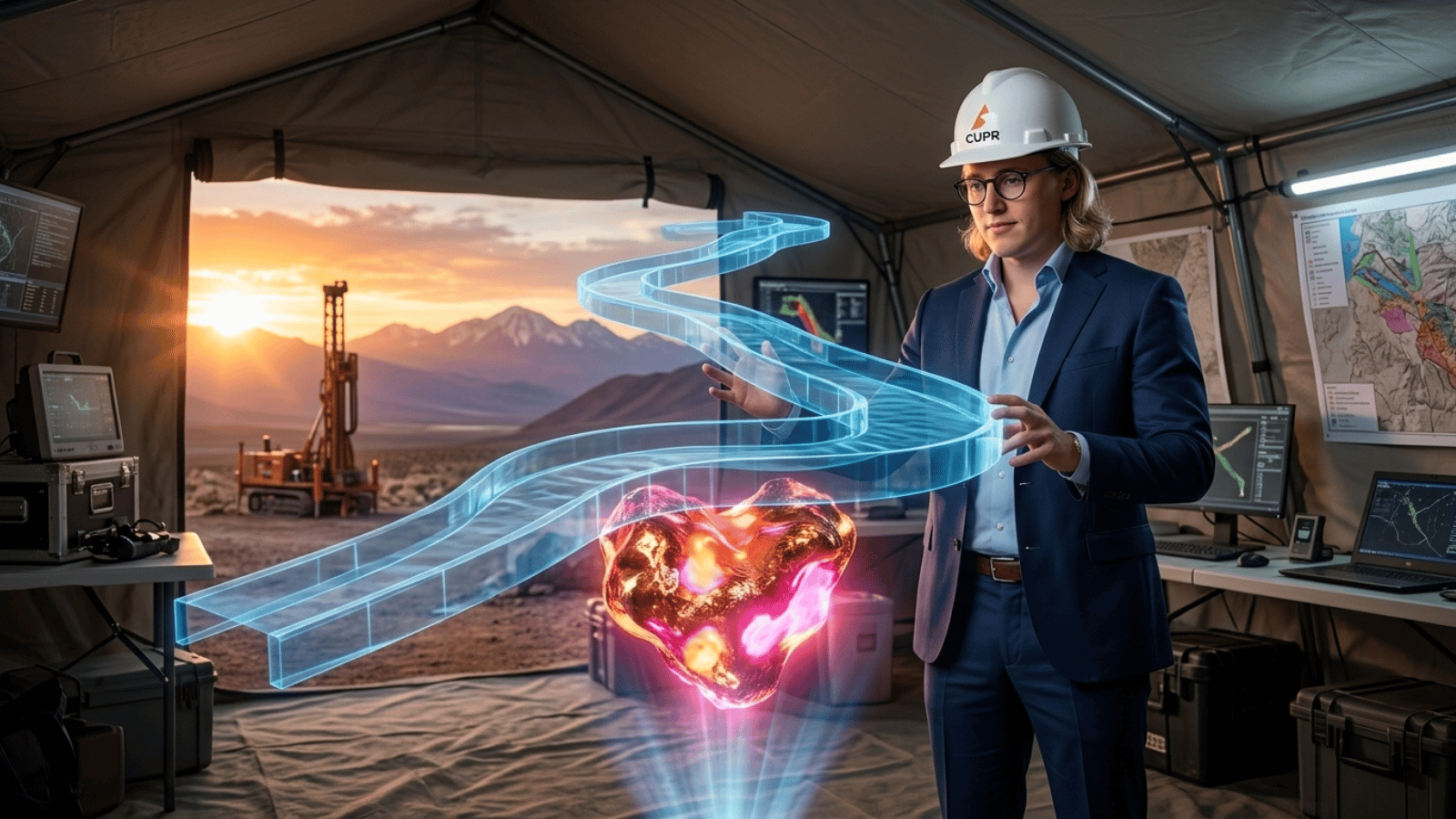
Super Copper Corp. (CSE: CUPR | OTCQB: CUPPF), led by CEO Zac Dolesky, has just redefined the scale of its Cordillera Cobre Project in Chile's Atacama region.
Utilizing ground surveys from Argali Geofísica and advanced 3D MVI modeling by the geological consultants at APEX Geoscience Ltd., the team has successfully linked a continuous 3.5-kilometre magnetic corridor.
This new data perfectly overlaps with previous chargeability anomalies at depth, providing two independent geophysical markers for a major IOCG system.
The best part?
The highest-intensity core sits directly beneath shallow historical drill holes, where ALS Global previously processed assays up to 1.6% copper at the margins, leaving the heart of this massive target completely untouched as the company finalizes its Phase 1 drill program.
Are we looking at the Atacama's next major copper discovery?
We want your feedback on this week’s market insights! How’d we perform? 📈📉Let us know where we stand! 🚀 |